


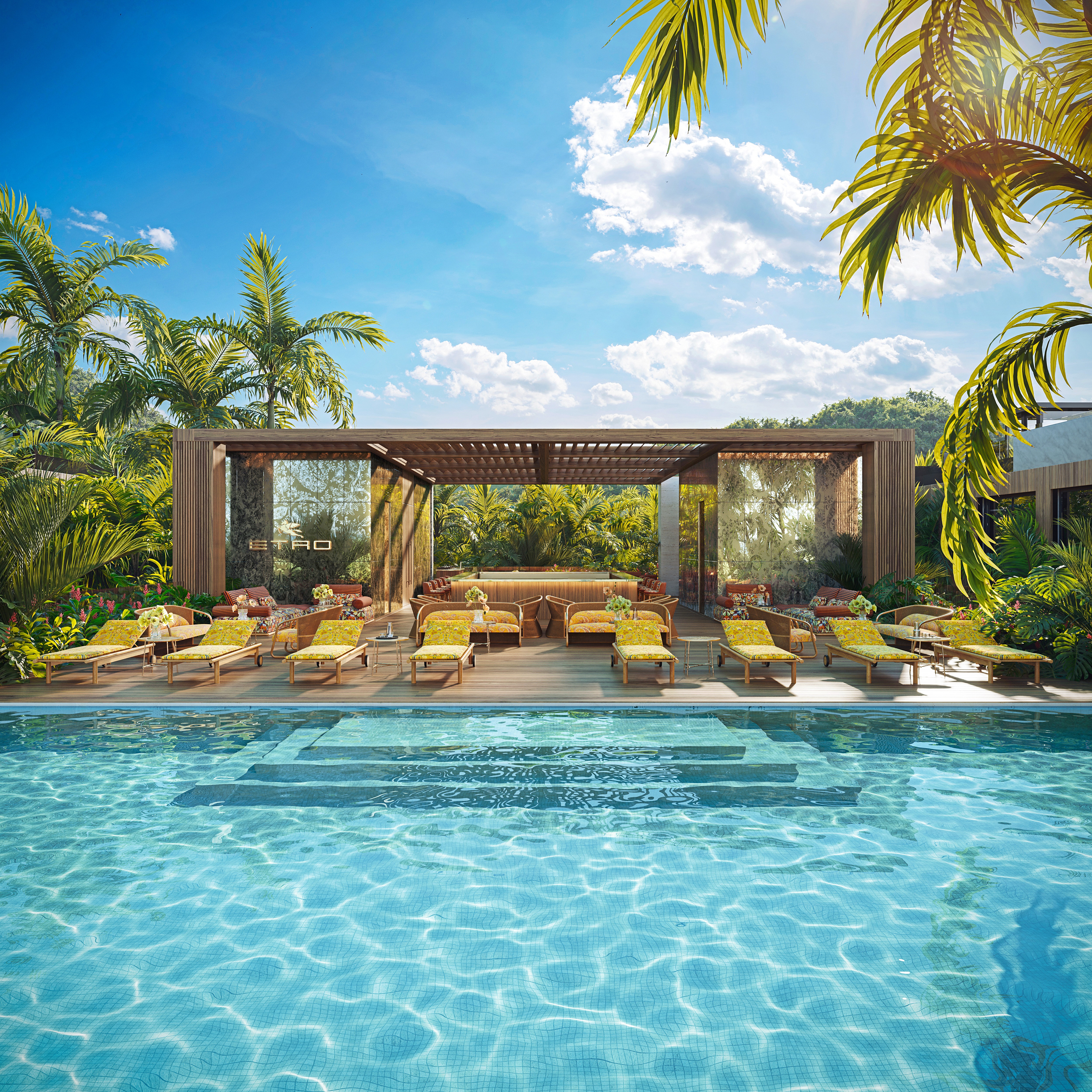
Search interest in branded residences in Phuket has grown steadily over the past two years, yet little of what currently ranks for the term explains what the category actually is. Most results are project marketing pages rather than a genuine buyer's guide. This article covers the category first, then sets out where Etro Residences Phuket, the ETRO-branded collection within Gardens of Eden, fits into that picture.
A branded residence is a privately owned home sold under a licensing or management agreement with a hospitality, design, or luxury brand. The brand does not build the project. It lends its name, design standards, and often its operational systems, in exchange for a fee and a share of the commercial upside the brand name generates.
What Is a Branded Residence?
A branded residence sits between a standard condominium and a hotel suite. The unit itself is privately owned, freehold or leasehold under Thai law depending on the phase, but it carries the design language and service standards of an established brand.
Three features separate a genuine branded residence from a project that simply borrows a brand name for marketing:
A signed licensing or management agreement between the developer and the brand, not a one-off design collaboration.
Brand-approved design standards applied to the residences themselves, not only the sales gallery or lobby.
An ongoing relationship, whether management, servicing, or design oversight, that continues after handover.
How the Brand Partnership Actually Works
Three separate agreements usually sit behind a branded residence, and buyers rarely see all three before signing anything.
Licensing covers the right to use the brand's name and identity on the building and in marketing. Terms commonly run 10 to 20 years and can be renewed, shortened, or in rare cases withdrawn.
Design input ranges from a full interior mandate covering finishes, furniture, and material palettes, to a lighter consultation limited to public areas. This distinction materially affects what the premium is actually paying for.
Management determines who runs the building day-to-day. Hospitality brands typically bring their own operations team and a rental programme. Fashion and design brands more often license the aesthetic only, leaving building management to the developer.
Why Branded Residences Command a Price Premium
The premium is measurable. Savills' Global Brand Premium Study puts the worldwide average at 33% over comparable non-branded stock, rising to 39% in resort locations, according to the Savills Branded Residences 2025/26 report.
Established cities: 30% average price premium
Emerging cities: 30% average price premium, with wider variance
Resort destinations: 39% average price premium
Global average: 33% price premium
Resort markets carry the highest branded premiums globally, driven by scarce genuine partnerships and strong tourism-linked rental demand.
The premium reflects more than a name on the entrance:
Design and build quality that buyers can verify before purchase
Professional, brand-standard management after handover
Stronger resale and rental positioning where genuine partnerships remain scarce
International recognition that resonates with the same buyer's peer network
Hotel-Branded vs Fashion-Brand-Branded Residences
Hotel-branded residences
Typical operator: in-house hospitality management company
What's included: hotel-grade service, F&B, housekeeping
Rental programme: often built into the agreement
Best suited to: buyers prioritising turnkey rental income
Fashion or design-branded residences
Typical operator: the brand's design studio, with the building managed separately
What's included: interior design identity, furnishings, styling
Rental programme: usually managed independently by the developer
Best suited to: buyers prioritising design identity and lifestyle
Hotel brands dominate Phuket's branded supply because they arrive with an operating structure already built for hospitality. Fashion and design brands are newer to the category and rarer in Thailand, which is part of why a genuine partnership like ETRO's carries scarcity value on top of the design itself.
What Buyers Should Verify Before Purchase

The checklist below sits alongside the general purchase process covered in our guide to buying property in Thailand, and applies specifically to any development marketed as a branded residence.
Request the signed licensing or management agreement itself, not just the marketing brochure, and confirm which entity holds the brand rights.
Establish exactly what the brand delivers: a full interior specification, public areas only, or naming rights alone.
Ask what happens if the brand agreement lapses or is not renewed, including whether the building can keep using the name.
Check the developer's delivery track record on previous phases before committing to an off-plan purchase.
Confirm the ownership structure available to you as a foreign buyer, including whether the unit sits within Thailand's foreign freehold quota. See our leasehold vs freehold guide for the full breakdown.
The Branded Residence Market in Thailand and Phuket
Thailand is now Asia's largest branded residences market by launched supply. C9 Hotelworks' 2026 review puts the sector at THB205.3 billion (USD6.4 billion), with 13,124 launched units and a 26% share of Asia's total supply, according to Bangkok Post.
Phuket alone accounts for 3,465 of those units, the largest resort-segment count in Asia, ahead of Hua Hin and Pattaya, reports The Nation Thailand.
Bang Tao and the wider Laguna area sit at the centre of that growth. It is where all four phases of Gardens of Eden, Eden, Park, Lake, and Etro Residences are located, 50 metres from Bang Tao Beach.
Foreign buyers considering a freehold unit should also factor in Thailand's 49% foreign ownership quota on condominiums, a limit set under the Condominium Act and unchanged since 1979.
Etro Residences Phuket: Gardens of Eden's Collection With ETRO
Gardens of Eden is not a fashion brand. It is a luxury branded residential resort developed by Amal Development Company Limited. Etro Residences Phuket is one collection within that resort, created in partnership with ETRO, the Milan-based fashion house founded in 1968.
ETRO's majority stake has been held via L Catterton, the private equity firm backed by LVMH Group, since 2021, and the founding Etro family fully exited its remaining stake in December 2025. Etro Residences Phuket is a licensed design collaboration between Gardens of Eden and ETRO. It is not a project owned or operated by LVMH itself.
What ETRO Contributes to the Design
ETRO's signature paisley motif and archive-driven textile patterns, adapted for interior furnishings
Colour palettes and material choices drawn from ETRO's ready-to-wear and home collections
Styling input on furniture, soft furnishings, and selected finishes within the collection
A distinct interior identity that separates Etro Residences Phuket from Eden, Park, and Lake Residences
Unit Types and Positioning Within Gardens of Eden
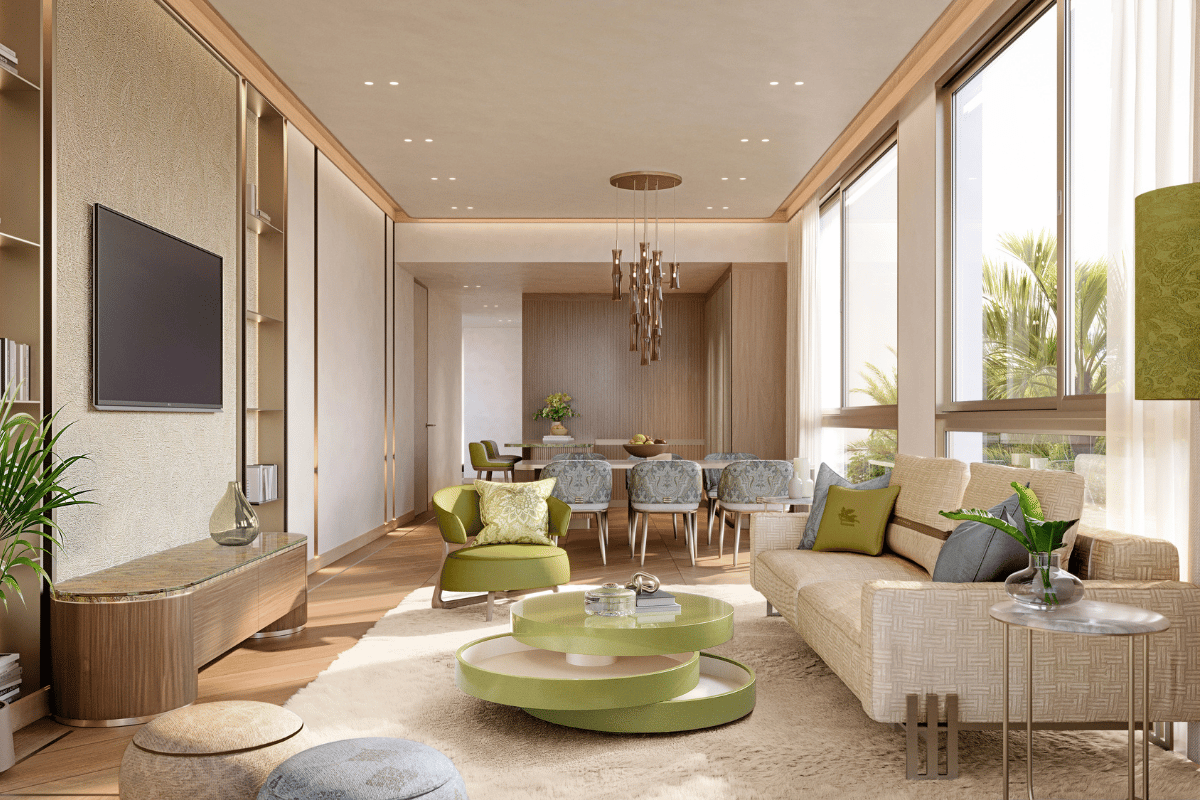
Etro Residences Phuket sits alongside the resort's other three phases. Eden Residences is positioned for rental yield and investment buyers, with a penthouse option for buyers seeking the most exclusive unit on site. Park Residences suits families and second-home buyers across 2- to 3-bedroom and duplex layouts. Lake Residences targets 1- to 2-bedroom investment buyers around the development's lake and garden frontage. Etro Residences Phuket adds a fourth option for buyers who want the ETRO design identity specifically.
Exact unit types, floor plans, and specifications within Etro Residences Phuket are confirmed at the enquiry stage. Buyers should contact the Gardens of Eden sales team directly through the Etro Residences Phuket page for current availability.
Branded residences in Phuket are still young relative to Bangkok, but genuine brand partnerships remain scarce even as supply grows. Buyers who verify the partnership itself, rather than relying on marketing language, are better placed to capture the premiums documented above rather than overpay for a name with no real agreement behind it. To discuss availability across Eden, Park, Lake, and Etro Residences Phuket, contact the Gardens of Eden sales team.
Frequently asked questions
What is a branded residence?
A privately owned home sold under a licensing or management agreement with a hospitality, design, or luxury brand, giving the owner brand-standard design and, in many cases, professional management.
Are branded residences more expensive than regular condos in Phuket?
Yes. Savills puts the global average premium at 33%, rising to 39% in resort destinations like Phuket, though the figure varies by brand and location.
Can foreigners buy a branded residence in Phuket?
Yes, within Thailand's 49% foreign freehold quota for condominiums. Villas and land follow separate leasehold rules under the Land Code.
Is Etro Residences Phuket owned by ETRO or LVMH?
No. It is developed by Amal Development Company Limited as part of Gardens of Eden, under a licensed design partnership with ETRO.
How can I confirm a branded residence partnership is genuine?
Ask for the signed licensing or management agreement, not the brochure, and confirm what the brand actually delivers versus what is implied in marketing.
What is the difference between a hotel-branded and a fashion-branded residence?
Hotel brands typically include an operating rental programme and hospitality-grade service. Fashion and design brands more often license the interior identity only, with building management handled separately.
Interested? Let us know.
Thank you! We will get back to you shortly.